Identification of Long-Term Treatment Effects via Temporal Links, Observational, and Experimental Data
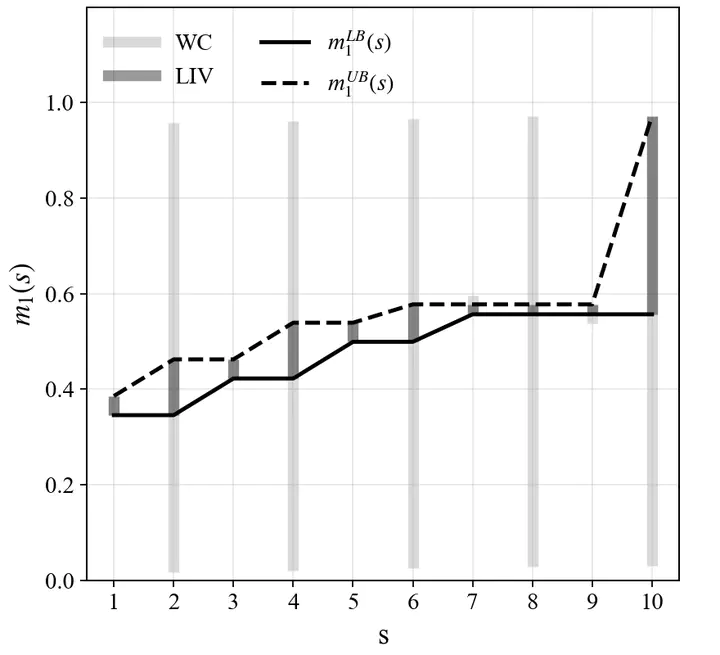
Abstract: Recent literature proposes combining short-term experimental and long-term observational data to provide alternatives to conventional observational studies for the identification of long-term average treatment effects (LTEs). This paper re-examines the identification problem and uncovers that assumptions restricting temporal link functions – relationships between short-term and mean long-term potential outcomes – are central in this context. The experimental data serve to amplify the identifying power of such assumptions; absent them, the combined data are no more informative than the observational data alone. Plausible inference thus hinges on justifiable restrictions in this class. Motivated by this, I introduce two treatment response assumptions that may be defensible based on economic theory or intuition. To utilize them and facilitate future developments, I develop a novel unifying identification framework that computationally produces sharp bounds on the LTE for a general class of temporal link function restrictions and accommodates imperfect experimental compliance – thereby also extending existing approaches. I illustrate the method by estimating the long-term effects of Head Start participation. The findings indicate that the effects on educational attainment, employment, and criminal involvement are lasting but smaller in magnitude than those established by sibling comparisons.